Meet Dawn
I’ve been chasing this question since childhood. Perplexed by it. Besotted by it. Engulfed by it.
It’s been both compass and anchor, muse and Rubik’s cube.
Early on, I started paying attention to the ways invalidation was used as a weapon, a power lever, and a dehumanizer. Then, how validation was an antidote, a connecting agent, and a transformative force for good.
In my twenties, I noticed how friends who’d been through traumatic events often reported that the pain of invalidation following those events was more painful than the initial traumatic event itself. I got three master’s degrees, all different angles coming at these prevailing questions, about what is to be human, why we do what we do, and how to humanize in places where dehumanization has crept in. A master’s degree in religion, a master’s degree in counseling, and a master’s degree in Middle Eastern cultures and religions. I lived outside North America for three years and I observed the harm of collective invalidation firsthand. I saw how entire groups of people were being devalued, marginalized, and dehumanized through systems of invalidation.
I've sat in Baghdad with a key sheikh of an Iraqi province (shortly after he survived an assassination attempt) and traveled in armored vehicles to meet with high-level leaders in Iraq. I've had lunch with the judge who sentenced Saddam Hussein to death. In these spaces, I have seen the weight of leadership, the capability of power to bring social change, the importance of trust, and how quality listening is one of a strategist's (and human's) best tools.
Through these journeys, I began tabulating the body’s responses to these experiences - the toll that invalidation was taking on people, somatically, psychologically, and existentially. At the intersection of these questions, I built my PhD thesis: “What is the body’s experience of validation and invalidation; and what is the power of validation toward transformation and liberation?” I spent five years on that quest. Mulled through endless research. Conducted a research study. Braided my lived experience into it.
Out of all of this, the Embodied Validation Framework and Humanizing Systems were born. The EVF (Embodied Validation Framework) is a process by which to locate places of human connection, build upon them, and get the humanity back at the center of it all. Humanizing Systems is a structure through which to get the humanity back into systems it’s been proceduralized out of, partly through using the Embodied Validation Framework. Through these channels, I want to help the world get more in touch with the beautiful, powerful, creative, and precious humanity within us all, unlocking freedom unto both a fuller individual self-expression and a fuller collective self-expression. We have answers within us. Brilliant ideas buried under dehumanizing gears and mechanisms. Let’s LET THEM OUT. Let them play. Let them breathe. Let them BE… HUMAN.
I listen and think alongside leaders of organizations, institutions, and communities who are working to change something larger than themselves. After nearly 40 countries, what I know is that understanding a culture, organizational or national, and the social systems inside it, is what opens gateways to change. I’m a learner at heart, and I tend to think at scale. In countries, organizations, and the cultures within them, that shows up as compassionate observation, pattern recognition rooted in our shared humanity, and a steady commitment to guiding change with the people living it, for the sake of all.
This is the energy and ethos I want to bring to my speaking, writing, training, and consulting. If that prompts a hopeful spark in your mind, reach out, let’s dream-storm.
I currently live in California, with my husband and three kids. This life is burgeoning, stretching, and ascending. It is my own quotidian journey of keeping humanity at the fore, in the midst of supporting three blooming humans through sibling disputes, soccer practice, and days staccato-ed in both hugs and struggs (can we add “struggs” as short for “struggles” in the cultural lexicon?).
Hugs and struggs, central to a life well lived.
“What does it mean to be human?”
“And when we’ve lost touch with that, how do we get back there?”
From personal, embodied experience to systemic understanding.
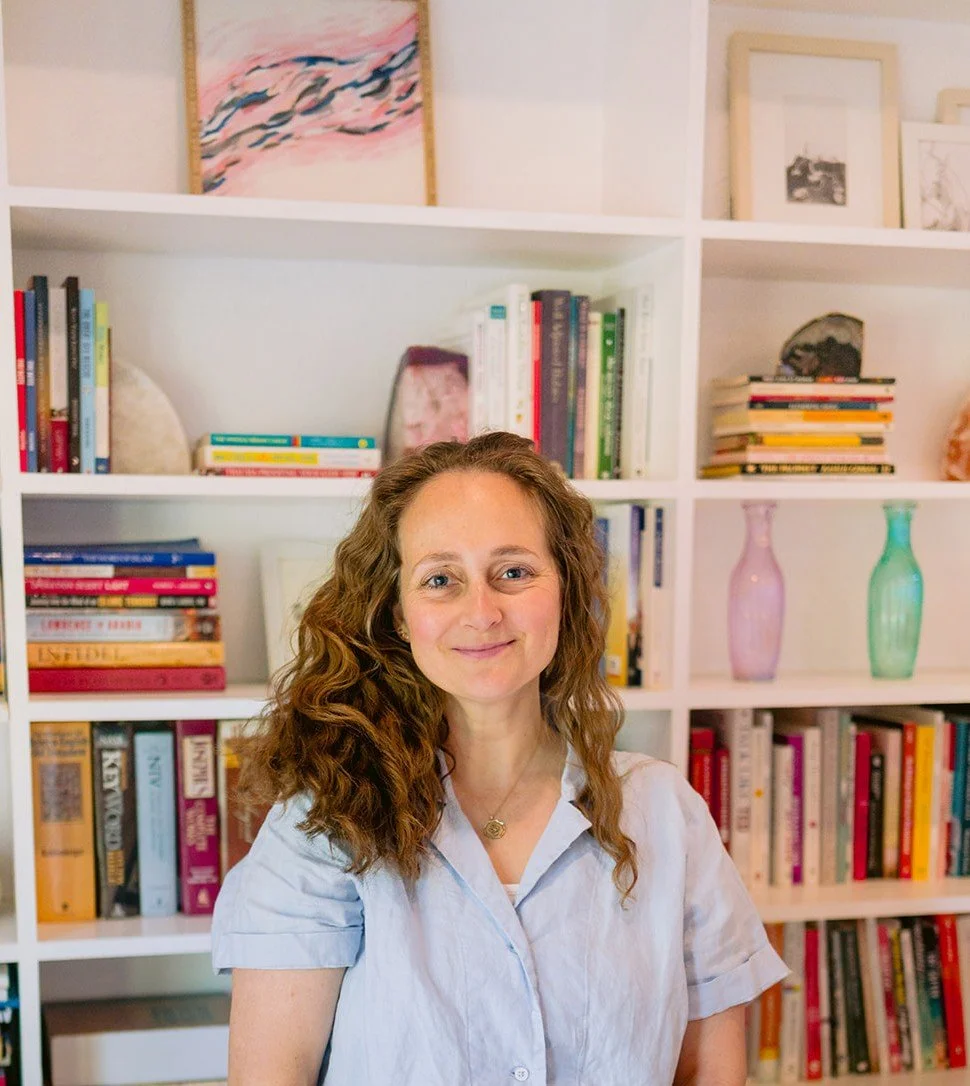
Dr. Dawn Bulchandani, PhD in Transformative Studies